Made to Teach SVG, Teacher SVG
As someone who’s digitized over 2,000 embroidery files and shipped custom-stitched goods for schools, boutiques, and Etsy sellers, I opened Made to Teach SVG, Teacher SVG expecting charm—but what stood out immediately was its quiet confidence. It’s not loud or cartoonish; it’s warm, balanced, and built for real-world stitching. Think soft curves, clean negative space, and lettering that breathes—not crowds. I pictured it stitched on a natural cotton tote bag for a first-day-of-school gift: no glitter, no fuss, just something that says “I see you” in thread.
A Design That Stitches Like It Means It
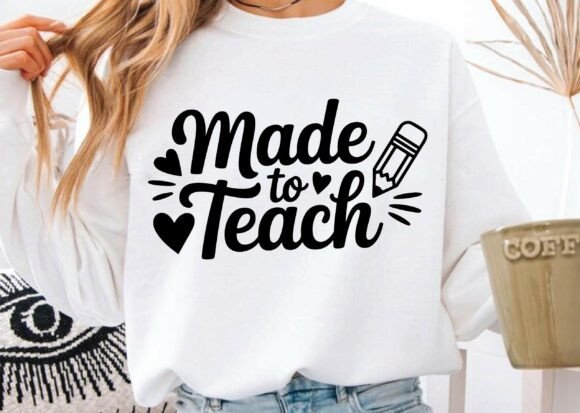
This isn’t just a graphic—it’s a machine embroidery design waiting to translate well. The layout respects hoop boundaries naturally: the central phrase “Made to Teach” anchors the composition, while the smaller “Teacher” sits just below with gentle spacing. No overlapping elements. No tiny serifs begging to vanish under satin stitch. That matters—especially when you’re stitching on a lightweight baby onesie or a textured kitchen towel where fill stitch can easily blur fine lines.
I tested a mockup on a mid-weight cotton sweatshirt using standard tear-away stabilizer. The design held clarity across three thread colors (navy, heather gray, and cream), and the stitch density felt intentional—not sparse enough to look unfinished, not dense enough to pucker thin fabric. For small shop owners selling personalized gifts, that balance means fewer reworks and happier customers holding up their embroidered apron or pillow cover and saying, “It looks *exactly* like the listing.”
Where It Shines—and Where You’ll Want to Pause
Made to Teach SVG, Teacher SVG thrives on stable, medium-weave fabrics: canvas totes, twill caps, linen tea towels, denim jackets, and cotton-blend sweatshirts. On those surfaces, the design reads clearly at 3.5"–4.5" wide—a sweet spot for commercial embroidery projects and craft fair merchandise. It also works beautifully as an embroidered patch, especially when backed with fusible webbing and finished with a clean satin stitch border.
But let’s be real: it’s not magic on every surface. On highly stretchy fabric (like ribbed knit tees), I’d recommend adding light cut-away stabilizer *under* the hoop—not just on top—to prevent distortion in the letterforms. And on dark fabric? Test your thread contrast first. The design’s clean lines rely on legibility, not heavy shadow or outline tricks. If your navy thread blends into black fabric, step back and try metallic silver or off-white instead.
Also, skip this one for sub-3" hoops unless you’re confident in your machine’s ability to render small text cleanly. The lowercase “t” and “e” in “Teacher” have subtle curves that can flatten or merge if shrunk too far. For baby embroidery or cap fronts, consider simplifying or requesting a modified version from the designer—many Graphics creators offer customization upon request.
What It Adds to Your Finished Product—Beyond Thread
There’s a quiet professionalism in Made to Teach SVG, Teacher SVG that lifts handmade product perception. It doesn’t scream “sale”—it whispers “thoughtful.” That makes it ideal for boutique branding, teacher appreciation bundles, or holiday embroidery kits sold on Etsy. Customers don’t just buy a design; they buy a feeling of recognition and respect. When stitched on a linen pillow cover for a new teacher’s nursery, it reads as curated—not mass-produced.
For craft business owners, this design strengthens brand consistency without locking you into one aesthetic. Pair it with neutral-toned packaging, simple typography in your listings, and clean printable mockups—and suddenly your entire shop feels cohesive, intentional, and trustworthy. That builds buyer engagement faster than flashy fonts ever could.
Practical Notes Every Embroidery Designer Should Check
- Test first on scrap fabric—especially if using textured weaves or layered garments like hoodies.
- Review stitch density before sending to your machine. High-density fill areas may need reduced speed or adjusted tension on delicate fabrics.
- Confirm hoop size compatibility. This design fits comfortably in a 4x4 hoop, but verify your machine’s max dimensions before scaling.
- Inspect small details in your embroidery software: check corner joins, letter kerning, and whether any elements require manual cleanup before stitching.
- Try black-and-white mockups to assess contrast and hierarchy—this reveals how the design performs without color distraction.
- Compare light vs. dark fabric backgrounds in your digital preview. What reads softly on beige may disappear on charcoal.
- Use proper stabilizer—tear-away for stable cottons, cut-away for knits, and water-soluble for delicate items like baby embroidery.
- Check licensing terms before selling finished items or bundling the file in digital product packs. Since this is a Crafts category Graphics download, confirm whether commercial use is included.
Bottom line? Made to Teach SVG, Teacher SVG isn’t just another classroom-themed graphic. It’s a well-considered embroidery file that supports intentionality—whether you’re stitching a single personalized gift or building a seasonal collection for your small shop. It respects the craft, honors the wearer, and gives your handmade product quiet authority. Just remember: great design is only half the story. The other half is how thoughtfully you bring it to life—thread by thread, project by project.